




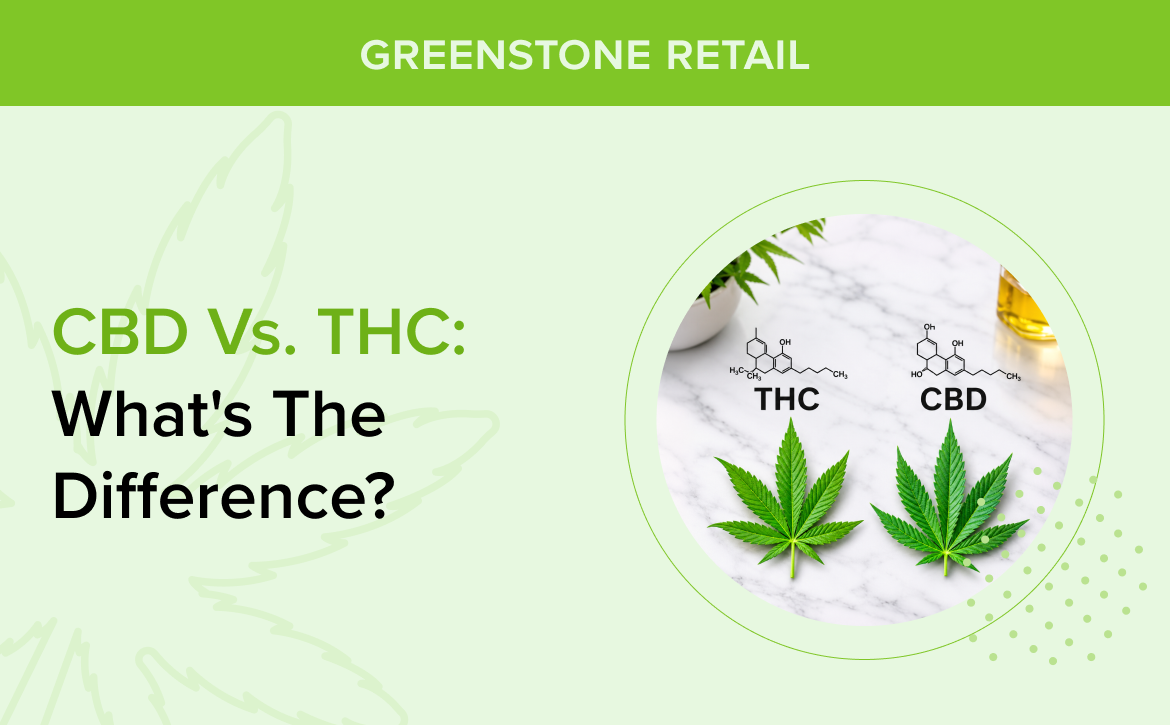
CBD and THC are two of the most well-known compounds found in cannabis. Although they come from the same plant, they affect the body differently, particularly when it comes to intoxication, potential benefits, and side effects.
The biggest difference is that THC produces the intoxicating effects commonly associated with cannabis, while CBD does not typically cause a high. However, both interact with the body’s biological systems, and their effects depend on factors such as concentration, product formulation, and individual response.
Whether you’re exploring cannabis for the first time or comparing different products, understanding CBD vs. THC can help you make informed decisions. This guide covers their key differences, effects, potential benefits, safety considerations, and legal status in California.
Table of Contents
ToggleWhat Is CBD?
CBD, or cannabidiol, is a naturally occurring cannabinoid found in hemp and other cannabis plants. Unlike THC, it does not typically produce the intoxicating high associated with marijuana.
CBD interacts with several biological signaling systems, although scientists are still investigating its precise mechanisms and potential therapeutic applications.
CBD is commonly found in products such as oils, tinctures, capsules, topical creams, and cannabinoid-balanced cannabis formulations.
How Does CBD Affect the Body?
CBD interacts with the body’s endocannabinoid system and other signaling pathways involved in various physiological processes.
Unlike THC, CBD does not strongly activate CB1 receptors in the same manner, which helps explain why it generally does not cause intoxication.
CBD is being studied for its possible effects on neurological conditions, anxiety, sleep, and other areas of health. However, research supporting many commercially advertised benefits remains limited. It can also cause side effects and interact with medications, so product quality and medical guidance matter.
What Is THC?
THC, or delta-9-tetrahydrocannabinol, is the primary intoxicating compound found in cannabis. It is responsible for many of the mind-altering effects commonly associated with marijuana.
THC interacts with cannabinoid receptors in the brain and nervous system, influencing memory, coordination, perception, and appetite. THC-containing products are available in several formats, including cannabis flower, edibles, concentrates, tinctures, and vape products.
How Does THC Affect the Body?
THC primarily activates CB1 receptors, which are concentrated in brain regions involved in cognition, movement, and perception.
Its effects may include:
- Changes in mood and sensory perception
- Altered perception of time
- Increased appetite
- Reduced coordination and reaction time
- Impaired short-term memory and concentration
Some individuals may also experience anxiety, panic, dizziness, or uncomfortable intoxication, particularly with higher doses. The intensity and duration of these effects depend on THC concentration, consumption method, tolerance, and other individual factors.
Key Differences Between CBD and THC
Although CBD and THC are both cannabinoids, several important differences influence how they are used and understood.
1. Intoxicating Effects
THC produces the high associated with cannabis by activating cannabinoid receptors involved in perception, coordination, and cognition. CBD does not typically cause intoxication. However, it can still affect the body and may cause drowsiness or other adverse effects.
Importantly, a product marketed as CBD may contain THC, particularly if it is full-spectrum or improperly labeled.
2. Interaction With the Endocannabinoid System
Both cannabinoids influence the endocannabinoid system, which helps regulate several physiological functions. THC directly activates CB1 receptors in the nervous system.
CBD has more complex interactions with cannabinoid and non-cannabinoid signaling pathways. Researchers continue investigating how these mechanisms contribute to its effects.
3. Available Cannabis Products
CBD and THC appear in different product categories, sometimes separately and sometimes together. CBD products commonly include oils, tinctures, capsules, and topicals.
THC products include cannabis flower, pre-rolls, edibles, vape pens, and concentrates. Some cannabis products contain both compounds in specific ratios, allowing customers to compare different cannabinoid formulations.
4. Duration of Effects
The duration of cannabinoid effects depends more on the product’s formulation and how you consume it than on the cannabinoid name alone.
Inhaled THC generally produces effects more quickly, while THC edibles may take longer to become noticeable and can produce longer-lasting intoxication. CBD also varies by formulation. An oral CBD product may have a different onset and duration than a topical formulation.
5. Safety and Side Effects
THC can impair reaction time, memory, and coordination. Frequent or high-potency cannabis use also carries risks, including cannabis use disorder. CBD is generally non-intoxicating but is not risk-free. Potential concerns include liver injury, medication interactions, sleepiness, and gastrointestinal effects. Neither compound should be considered universally safe simply because it comes from a plant.
CBD vs. THC Benefits: What Does Research Say?
CBD and THC have attracted significant medical and scientific interest. However, it is important to separate established medical applications from potential benefits that remain under investigation.
Potential Benefits of CBD
CBD has the strongest established medical evidence for certain seizure disorders. The FDA-approved prescription medicine Epidiolex contains purified CBD and is used to treat seizures associated with Lennox-Gastaut syndrome, Dravet syndrome, and tuberous sclerosis complex.
Researchers are also studying CBD for anxiety, sleep disturbances, and other conditions, but results remain mixed or insufficient for broad treatment claims. Over-the-counter CBD products are not equivalent to approved prescription medicines and should not be assumed to provide the same medical benefits.
Potential Benefits of THC
THC and related compounds have also been investigated for medical applications. Prescription cannabinoid medicines, including certain synthetic THC-containing medications, have approved uses involving chemotherapy-related nausea and vomiting and appetite loss associated with AIDS.
Research has also examined cannabis and cannabinoids for certain types of chronic pain and other symptoms. However, evidence quality varies, and benefits must be weighed against adverse effects.
THC-containing consumer products should not be assumed to have the same effectiveness or safety profile as approved medications.
Is CBD or THC Better?
Neither cannabinoid is universally better. CBD differs from THC primarily in its lack of typical intoxicating effects and its distinct pharmacological profile. THC produces intoxication and carries additional risks related to impairment.
When considering either substance for a medical condition, decisions should be based on established evidence and professional medical advice rather than unverified marketing claims.
Can CBD and THC Be Used Together?
Yes. Some cannabis products contain both CBD and THC, sometimes described as balanced or ratio-based formulations.
These products commonly display ratios such as:
- 1:1 CBD to THC: Equal labeled amounts of CBD and THC.
- 2:1 CBD to THC: Twice as much CBD as THC.
- 1:3 CBD to THC: Three times as much THC as CBD.
For example, a product containing 10 mg CBD and 10 mg THC has a 1:1 CBD-to-THC ratio.
Researchers have examined whether CBD changes some of THC’s effects, but findings depend on the doses and conditions studied. CBD should not be relied upon to cancel THC intoxication.
When comparing combination products, check the actual milligrams of each cannabinoid rather than focusing only on the ratio.
How to Compare CBD and THC Products
Product labels matter, especially when choosing between cannabinoid-containing formulations.
1. Check the CBD and THC Content
Cannabis packaging may express cannabinoid concentrations as percentages or milligrams. Flower commonly displays potency as a percentage, while edibles and tinctures often identify cannabinoids in milligrams. Always distinguish between the amount per serving and the total amount in the package.
2. Review the Product Type
Flower, tinctures, edibles, concentrates, and topicals can have different concentrations and deliver cannabinoids in different ways. Edibles may take longer to produce noticeable effects, increasing the risk of consuming more before the first serving has taken effect.
3. Understand the Cannabinoid Ratio
Some products feature CBD and THC together. A 1:1 formulation does not necessarily produce equal effects from both compounds. The amounts, route of administration, and individual response still matter.
4. Look for Laboratory Testing
A Certificate of Analysis (COA) provides laboratory information about cannabinoid concentrations and, where tested, potential contaminants. In California’s licensed cannabis market, products are subject to testing and labeling requirements. Reviewing batch information helps verify a product’s contents.
5. Consider Personal Safety
THC can impair driving and other activities requiring attention. CBD can interact with medications and cause side effects. Avoid combining cannabinoids with alcohol or other impairing substances, and consult a healthcare professional if you take medication or have an underlying medical condition.
Are CBD and THC Legal in California?
California allows adults aged 21 or older to purchase cannabis from licensed retailers. Eligible patients aged 18 or older may access medicinal cannabis with the appropriate physician recommendation.
However, CBD and THC products are not regulated identically. THC-containing cannabis products are subject to California’s licensed cannabis regulations, including requirements for testing, packaging, labeling, and age verification.
Hemp-derived CBD products follow separate rules based on their formulation and intended use. California has also strengthened restrictions on intoxicating hemp products, including those containing detectable THC.
Federal rules differ from California law, so don’t determine a product’s legal status solely by its hemp origin. Consumers should check current regulations and purchase cannabis products through properly licensed businesses.
Where to Explore CBD and THC Products in California
Understanding the differences between CBD and THC makes it easier to compare cannabis products based on their cannabinoid content, formulation, and intended use. At GreenStone Retail, California customers can explore a range of cannabis products, including flower, edibles, and topicals.
Depending on current inventory, some products may contain THC, CBD, or a combination of both. Before ordering, review cannabinoid concentrations, product descriptions, laboratory information where available, and delivery eligibility.
Final Thoughts
The key difference between CBD and THC is how they affect the body. THC produces intoxicating effects, while CBD does not typically cause a high. Both cannabinoids have distinct characteristics, potential applications, and safety considerations.
Understanding their differences in potency, side effects, product types, and legal status can help you evaluate cannabis products more confidently.
Explore GreenStone Retail’s cannabis product selection to compare options, review cannabinoid information, and find products that match your preferences
FAQs
No. CBD itself does not typically produce the high associated with THC. However, some CBD products may contain THC, which can cause intoxication depending on the amount present.
Research has investigated both cannabinoids for pain-related applications, but evidence varies. Some THC-containing or combined cannabinoid products have shown modest benefits for certain chronic pain conditions, alongside side effects. CBD alone has not been established as a consistently effective pain treatment.
CBD generally does not cause THC-like intoxication or impairment. However, it may cause sleepiness, digestive problems, liver-related concerns, and medication interactions. Both cannabinoids have risks.
Yes. Some cannabis formulations contain both cannabinoids in ratios such as 1:1 or 2:1. Combining them does not eliminate THC-related impairment, and the effects can vary depending on the actual amounts consumed.
Standard cannabis drug tests usually look for THC metabolites rather than CBD. THC-containing products can produce positive results. CBD products may also create a positive result if they contain enough THC.
Not necessarily. Both CBD and THC are subject to product-specific laws. In California, adults aged 21 or older can legally purchase regulated cannabis products from licensed retailers, while hemp-derived CBD products are subject to separate requirements.