



There is no clinically proven “best weed strain for anxiety.” Cannabis affects everyone differently, and THC can sometimes make anxiety, paranoia, or racing thoughts worse.
If anxiety is a concern, a better approach is to compare THC, CBD, potency, expected effects, and your own tolerance.
CBD-forward and lower-THC strains may be easier for some people to manage, while stronger THC-dominant strains may feel more relaxing to experienced consumers but uncomfortable to others.
How to Choose a Weed Strain When Anxiety Is a Concern
Before looking at strain names, focus on the product itself.
1. Check THC and CBD
THC creates the intoxicating effects of cannabis. For some people, it feels relaxing. For others, especially at higher doses, it may cause anxiety, paranoia, or discomfort.
CBD is non-intoxicating and is being studied for its potential effects on anxiety. Research is promising, but results are still mixed and more high-quality studies are needed.
A 2024 review of CBD and anxiety research found potential benefits in some studies, but CBD should not be treated as a proven anxiety treatment.
2. Think About Your THC Tolerance
If you already know that strong cannabis makes you restless or panicky, pay attention to that.
Choosing the highest THC percentage is not always better. A lower-potency or CBD-forward product may feel more manageable.
3. Match the Strain to the Time of Day
Some strains are commonly associated with relaxation and evening use. Others are described as more uplifting or energetic.
If you are not sure how indica, sativa, and hybrid labels differ, read GreenStone’s Indica vs. Sativa guide.
7 Popular Weed Strains to Compare for Anxiety
These strains are commonly discussed by consumers looking for relaxation or a more manageable cannabis experience. They are not proven anxiety treatments, and responses can vary.
1. ACDC
Best for comparing: Lower intoxication
ACDC is a CBD-dominant strain with relatively low THC. That makes it one of the more logical options to compare if you want to avoid a strong high.
May suit: THC-sensitive consumers or people who want a clearer-headed experience.
Keep in mind: CBD-rich does not mean risk-free or medically proven for anxiety.
2. Harlequin
Best for comparing: Daytime and lower-intoxication preferences
Harlequin is another well-known CBD-rich strain. It is often described as more clear-headed and functional than high-THC flower.
May suit: People who want to stay more alert during the day.
3. Cannatonic
Best for comparing: A more balanced cannabinoid profile
Cannatonic is commonly associated with a more balanced THC-to-CBD ratio than many recreational strains.
That can make it worth comparing if you want some cannabis effects without immediately choosing a very high-THC product.
May suit: Consumers looking for a moderate experience.
4. Blue Dream CBD
Best for comparing: Balanced daytime use
Blue Dream CBD is different from standard Blue Dream because it contains a more meaningful amount of CBD.
GreenStone currently lists Autumn Brands Blue Dream CBD 3.5 Grams, giving shoppers a THC-and-CBD option to compare with stronger THC-dominant flower.
May suit: Consumers looking for CBD with some THC.
5. Northern Lights
Best for comparing: Evening relaxation
Northern Lights is a classic indica commonly associated with a relaxing, evening-focused experience.
It may appeal to people who want to wind down, but it is usually THC-dominant.
Consider carefully if: THC has made you anxious or panicky before.
6. Blue Dream
Best for comparing: Uplifting daytime effects
Blue Dream is a popular hybrid often described as uplifting with some physical relaxation.
GreenStone currently carries Pacific Stone Blue Dream 7 Grams.
May suit: Experienced consumers who prefer a daytime-friendly profile.
Consider carefully if: Higher THC tends to make you restless.
7. Strawberry Cough
Best for comparing: Energetic or social daytime effects
Strawberry Cough is commonly associated with an upbeat and energetic experience rather than heavy sedation.
GreenStone currently lists Smoakland Strawberry Cough 3.5G.
May suit: Experienced daytime consumers.
Consider carefully if: Stimulating THC products tend to increase racing thoughts.
Strain Comparison Table
Use this table to quickly compare the weed strains:-
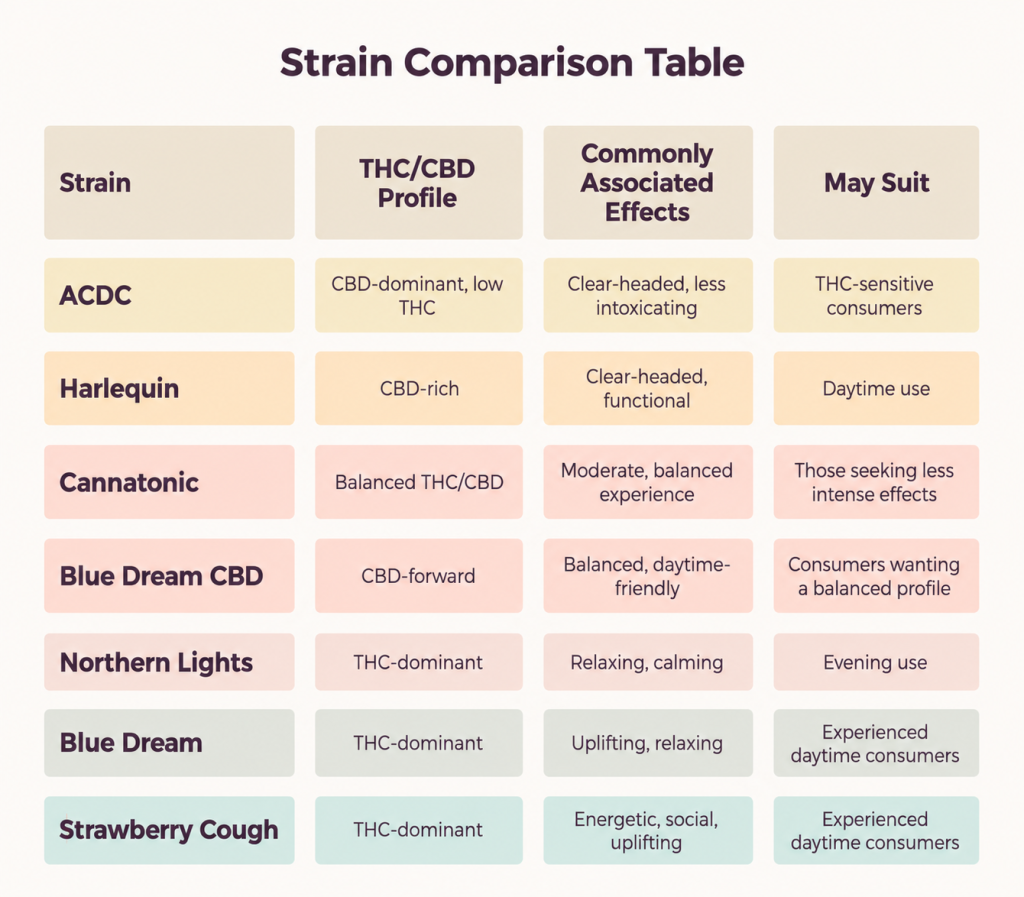
Quick takeaway: If minimizing intoxication matters most, ACDC, Harlequin, Cannatonic, and CBD-forward versions of Blue Dream are more logical strains to compare. If you are already comfortable with THC, Northern Lights, Blue Dream, and Strawberry Cough offer different relaxing or uplifting profiles.
Can Weed Make Anxiety Worse?
Yes, it can.
The CDC explains that cannabis can cause anxiety and paranoia in some people. Higher THC exposure may be especially uncomfortable for people who are already sensitive to cannabis.
Your risk can also depend on:
- THC potency
- Amount consumed
- Previous cannabis experience
- Personal sensitivity
- Product type
If cannabis repeatedly leaves you feeling more anxious or panicky, increasing the dose or choosing a stronger strain is unlikely to be a sensible next step.
How to Narrow Down the Right Weed Strain
Once you have a shortlist, match the product to your tolerance and the experience you actually want:
- To minimize intoxication: Compare ACDC, Harlequin, Remedy, or Cannatonic.
- For a balanced cannabinoid profile: Consider Pennywise or Blue Dream CBD.
- For evening relaxation: Northern Lights, Granddaddy Purple, Ice Cream Cake, or Purple Punch may be a better fit.
- For a more uplifting daytime profile: Blue Dream, Jack Herer, or Strawberry Cough may be worth comparing, but use more caution if stimulating THC products worsen your anxiety.
- If you are THC-sensitive: Do not choose a product simply because it has the highest THC percentage. A lower-potency or CBD-forward option may be easier to manage.
- If a strain has caused anxiety before: Treat that as useful information and choose a different profile rather than increasing the dose.
When Anxiety Needs Professional Care Before Cannabis
Cannabis should not replace professional care for persistent or severe anxiety.
Speak with a qualified healthcare professional if anxiety:
- Causes frequent panic attacks
- Interferes with your sleep
- Affects work or relationships
- Keeps getting worse
- Becomes difficult to manage on your own
The FDA has not approved cannabis itself to treat anxiety or any other disease or medical condition.
Cannabis and CBD products may also interact with medications. If you take prescription medication or have a history of severe anxiety, panic attacks, or psychosis, professional guidance is especially important.
Final Thoughts
There is no single “best weed strain for anxiety.” The right choice depends on your tolerance, cannabinoid profile, and desired effects. Lower-THC and CBD-forward options may suit those seeking a calmer experience, while experienced users may prefer other strain types. Always consider the actual product details rather than relying only on the strain name.
Ready to compare your options? Browse GreenStone’s cannabis flower selection and explore products based on your tolerance, preferred effects, and daily routine.