



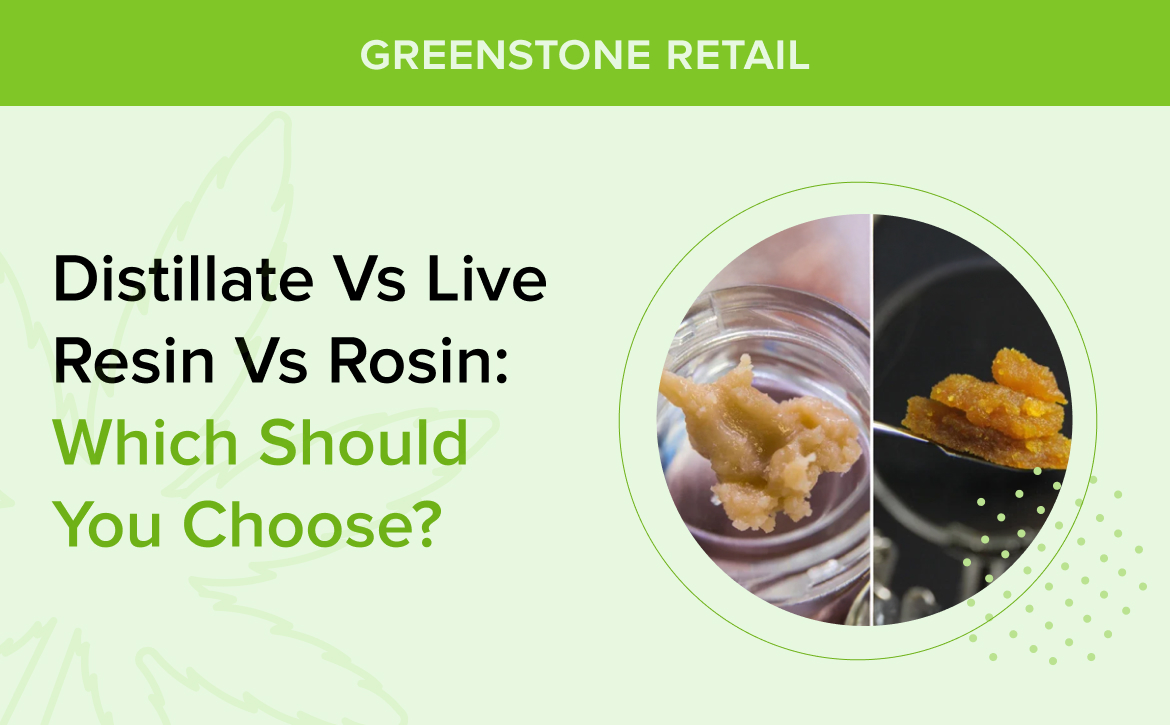
Distillate, live resin, and rosin can all appear in vape cartridges, dab concentrates, edibles, and infused pre-rolls, but they are not interchangeable. Each name points to a different production method, level of refinement, flavor profile, and price range.
A high THC percentage may look impressive, but it does not tell you how natural the flavor will be, whether terpenes were preserved or added later, or why one gram costs more than another. The best option depends on what you value most: consistency, strain flavor, solventless processing, convenience, or price.
This guide explains the differences between distillate, live resin, and rosin so you can compare products with more confidence in 2026.
Table of Contents
ToggleDistillate vs Live Resin vs Rosin at a Glance
Distillate is a highly refined extract commonly chosen for potency, consistency, and value. Live resin is usually made from fresh-frozen cannabis and is known for stronger strain-specific aroma. Rosin is made using heat and pressure rather than chemical extraction solvents and is often marketed as a premium concentrate.
| Feature | Distillate | Live Resin | Rosin or Live Rosin |
|---|---|---|---|
| Production method | Extracted, refined, and distilled | Usually extracted from fresh-frozen cannabis with hydrocarbons | Mechanically pressed with heat and pressure |
| Starting material | May use different cannabis feedstocks | Cannabis frozen shortly after harvest | Flower, kief, or hash; live rosin starts with fresh-frozen material |
| Natural terpene character | Usually reduced; terpenes may be added back | Typically bold and strain-specific | Often rich and close to the starting material |
| Typical THC profile | Frequently very high | Commonly high | Commonly high |
| Price range | Usually the most affordable | Mid-range to premium | Often the most expensive |
| Common formats | Carts, edibles, tinctures, infused pre-rolls | Carts, disposables, sauce, sugar, badder | Dabs, carts, gummies, hash holes, infused pre-rolls |
| Best known for | Consistency and value | Flavor and strain character | Solventless processing and premium flavor |
These are general patterns, not guarantees. Product freshness, starting materials, formulation, storage, and hardware can matter as much as the extract category itself.
How Distillate, Live Resin, and Rosin Are Made
Cannabis concentrates contain cannabinoids and other plant compounds in a more concentrated form than flower. One useful distinction is that distillate, live resin, and rosin refer to production methods, whereas sauce, sugar, badder, wax, crumble, and diamonds usually refer to texture. Live resin, for example, may be sold as sauce, badder, or sugar.
- Distillate
Distillate begins with extracted cannabis oil that undergoes extensive refinement and distillation. The process concentrates selected cannabinoids, commonly delta-9 THC, while removing many other plant compounds. This creates a thick, relatively neutral oil that works consistently in cartridges, gummies, tinctures, and infused pre-rolls.
Because much of the original aroma is removed, manufacturers may add cannabis-derived or botanical terpenes afterward. A strain name on a distillate cart may therefore describe its added flavor profile rather than an oil that closely matches the original flower.
-
Live resin
Live resin begins with cannabis frozen shortly after harvest rather than dried and cured. In cannabis terminology, “live” refers to this fresh-frozen starting material. Freezing helps protect volatile aromatic compounds that can change during drying and storage.
The material is commonly processed with butane, propane, or a hydrocarbon blend in a controlled facility. The solvents separate cannabinoids and aromatic compounds from the plant before the solvents are removed. Live resin is therefore not solventless, even though it may retain a fresh, plant-forward profile.
-
Rosin
Rosin is made by applying heat and pressure to flower, kief, or hash. No butane, propane, or other chemical extraction solvents are used. Flower rosin is pressed from dried flower, while hash rosin is pressed from collected trichomes or hash.
Live rosin generally starts with fresh-frozen cannabis that is washed to separate the trichomes, dried, and then pressed. These extra steps and lower yields help explain its higher price.
How Distillate, Live Resin, and Rosin Compare
Distillate, live resin, and rosin differ in flavour, potency, price, processing method, and available product formats. Distillate is typically more refined and affordable, live resin is known for preserving stronger strain character, and rosin is a solventless option that often carries a higher price. Comparing these factors can help customers choose the concentrate that best matches their preferences and budget.
How They Compare in Flavor
- Distillate: Usually has the least natural cannabis flavor because refinement removes much of the original terpene profile. Added terpenes may create fruit, dessert, mint, citrus, or gas notes.
- Live Resin: Often preserves more of the original strain character, with flavors such as citrus, berry, pine, floral, earthy, spicy, or fuel-like notes.
- Rosin: Can offer rich, natural, strain-specific flavor, especially when made from high-quality hash or fresh-frozen cannabis. Final quality still depends on the starting material and producer.
How They Compare in Potency
- Distillate: Often has a high listed THC percentage because selected cannabinoids are concentrated during production.
- Live Resin: Can also be potent, while retaining more terpenes and other cannabis compounds.
- Rosin: Potency varies by source material, production method, and product format.
A higher THC percentage does not always mean a stronger experience. Dose, device performance, tolerance, freshness, and individual sensitivity also matter.
How They Compare in Price
- Distillate: Usually the most affordable because it can be produced at scale and offers a higher finished yield.
- Live Resin: Commonly falls in the middle price range due to fresh-frozen material and more careful processing.
- Rosin: Usually costs the most because it requires high-quality material, specialised handling, and often produces a lower yield.
Prices may vary by brand, strain, package size, potency, format, and available discounts.
Common Product Types
- Distillate: Cartridges, disposable vapes, gummies, tinctures, capsules, and infused pre-rolls.
- Live Resin: Cartridges, all-in-one vapes, sauce, sugar, badder, and diamonds.
- Rosin: Fresh press, cold cure, dab concentrates, vape oil, edibles, and rosin-infused pre-rolls.
Product format also matters. Inhaled products generally act faster, while edibles usually take longer to produce effects and may last longer.
Before ordering, check the ingredient list, batch data, terpene source, and whether the product contains genuine live resin or rosin rather than a flavored distillate blend.
Which Concentrate Should You Choose?
There is no universal winner. The right concentrate depends on your priorities, tolerance, budget, and preferred format.
- Choose distillate for value and consistency: Distillate is often the practical choice for predictable formulation, high cannabinoid concentration, and a lower price. Its neutral base also works well in edibles and flavored vape carts. The trade-off is less natural plant character.
- Choose live resin for bold strain flavor: Live resin suits consumers who want noticeable differences between strains and a more cannabis-forward aroma. It often provides a useful balance between flavor, availability, and price.
- Choose rosin for solventless processing: Rosin is the clear option when avoiding chemical extraction solvents is an important buying preference. It can deliver rich flavor and is often produced in smaller batches, but usually costs more.
- For vape cartridges, check the hardware: Distillate carts are widely available, live resin carts emphasize strain flavor, and live rosin vapes offer a premium solventless option. Poor hardware can still clog, leak, or produce uneven vapor.
- For edibles, distillate is often practical: Its neutral taste makes it easy to use in gummies and other foods. Live resin or rosin edibles may appeal to consumers who want a more cannabis-forward ingredient.
- For dabbing, compare freshness and texture: Both live resin and rosin can work well. Consider the producer, strain, texture, package date, storage, and batch information rather than assuming the most expensive jar is best.
Solventless is not a complete safety rating. Rosin can still contain a high amount of THC. Licensed live resin must also pass applicable California testing, including testing for residual solvents and processing chemicals.
How to Read the Label and Shop GreenStone Products
Before buying, look beyond the largest THC number:
- Total cannabinoids: Review THC, CBD, and other listed cannabinoids.
- Serving information: Check whether potency is shown per serving or for the full package.
- Ingredients: Look for added terpenes, flavors, carrier ingredients, or blended extracts.
- Extraction type: Identify distillate, live resin, rosin, or a combination.
- Format: Confirm whether it is a 510 cart, pod, disposable, dab, edible, or infused pre-roll.
- Batch and dates: Potency, freshness, and consistency can change between batches.
- Licensed source: California products must pass required testing before being sold retail.
GreenStone carries products across all three categories. Inventory and batch details can change, so use the live listing for current price, THC, availability, and ingredients.
- 528 Lemon Berry Kush 1-Gram Cartridge: A delta-9 distillate cartridge with an added proprietary terpene blend.
- Raw Garden GMO Glue Live Resin – 1 Gram: A jarred live resin option for shoppers comparing dab-ready concentrates.
- Jeeter Juice Wedding GLTO Live Resin Disposable – 1 Gram: An all-in-one live resin vape with the extract and hardware in a single unit.
- CLSICS SF OG Live Rosin All-In-One – 1 Gram: A solventless live rosin vape for consumers seeking strain-specific flavor.
You can also browse GreenStone’s cannabis concentrates, vape pens, and infused pre-rolls.
How to Use and Store Cannabis Concentrates Responsibly?
Cannabis concentrates can deliver a large amount of THC in a small serving. Someone comfortable with flower may still find a vape, dab, or infused pre-roll unexpectedly strong. Start with a small amount and allow time to assess the effect before consuming more.
For edibles, follow the serving directions. Edible effects generally take longer to appear than inhaled cannabis, so taking another serving too quickly can lead to an uncomfortable experience.
Store concentrate jars tightly closed and away from heat, direct light, and excess air. Do not leave jars, cartridges, or disposable vapes in a hot vehicle. Keep cartridges upright when possible and follow the manufacturer’s guidance.
Some rosin products include refrigeration instructions, but this is not required for every concentrate. If a refrigerated jar needs to be opened, let the sealed container move closer to room temperature first to reduce condensation.
Do not drive or operate machinery while impaired. High THC doses may cause anxiety, dizziness, agitation, paranoia, or confusion. Keep all cannabis products and devices secured away from children and pets.
Final Verdict
Distillate, live resin, and rosin each serve a different type of consumer. Distillate is the most practical choice for consistency, affordability, and flexible use across vapes, edibles, tinctures, and infused products. Live resin is better suited to shoppers who care about strong strain-specific aroma and a fuller cannabis flavor. Rosin is the premium option for those who prioritize solventless processing and a profile that stays closer to the source material.
The best choice is not necessarily the product with the highest THC percentage or the highest price. Extraction method, freshness, ingredients, hardware, batch information, and personal tolerance all influence the final experience. Before buying, compare the complete label and choose the format that fits your preferred flavor, budget, and level of experience.
FAQs
Live resin is often better for natural cannabis flavor and strain character. Distillate may be better for affordability, consistent formulation, neutral flavor, and edibles.
Not necessarily. Distillate often has a higher printed THC percentage, but dose, format, device, inhalation size, freshness, and tolerance affect how strong it feels.
It generally means the cannabis was frozen shortly after harvest instead of being dried and cured, helping preserve more volatile aromatic compounds.
No. Rosin can be pressed from dried flower, kief, or hash. Live rosin usually begins with fresh-frozen cannabis processed into hash before pressing.
Yes. A sativa product may make some people tired or physically relaxed. Fatigue, dose, tolerance, product chemistry, and expectations can all influence the experience.
Not automatically. Solventless describes the extraction method, not the overall safety or potency of the product.
Much of the original terpene content is removed during refinement. Manufacturers may add cannabis-derived or botanical terpenes afterward.
It requires fresh-frozen cannabis, trichome separation, careful drying, pressing, and additional handling, often with a lower yield.
Distillate carts are usually affordable and consistent. Live resin focuses on fuller strain flavor, while live rosin offers solventless processing at a higher price.